
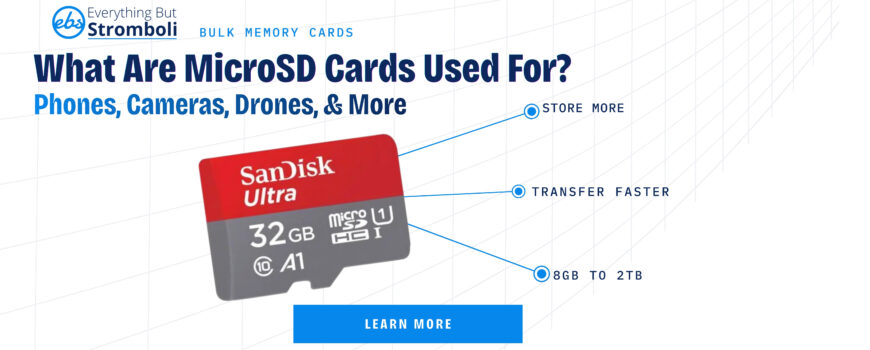
MicroSD cards are one of the most flexible storage formats in consumer electronics. They show up in small devices that need removable storage, simple file transfer, or a way to expand onboard memory without changing the device itself. That is why people ask what are microSD cards used for?
MicroSD cards are used in phones, cameras, drones, dash cams, gaming devices, and other compact electronics that need portable storage.
They are small, easy to move, and useful anywhere the device has limited built-in storage or needs data to be swapped quickly.
Everyday Consumer Uses
Most people first run into microSD cards in phones, cameras, and portable game devices. The card acts like an easy storage extension, giving the device room for more photos, more video, or more saved files.
That convenience is why microSD cards remain common even as cloud storage has grown. If the device needs something local, removable, and lightweight, microSD still makes sense.
Business And Field Uses
MicroSD cards are also useful in devices that stay in the field, like dash cams, trail cameras, and certain security systems. In those cases, the card is not just a convenience. It is part of how the device captures and keeps the record.
For business buyers, that means the right card matters more than just price. A card that works for casual storage may not be the best fit for recording or repeated overwrite cycles.
Why Capacity And Speed Matter
The use case should determine the spec. A simple storage card does not need the same performance as a card that records video or handles constant data movement.
That is why the best buying decision usually starts with the device, not the brand name on the package.
The Bottom Line
If you are buying for a specific device, start with the microSD cards category and narrow by capacity and workload. The closer the card matches the device, the fewer problems you will run into later.